
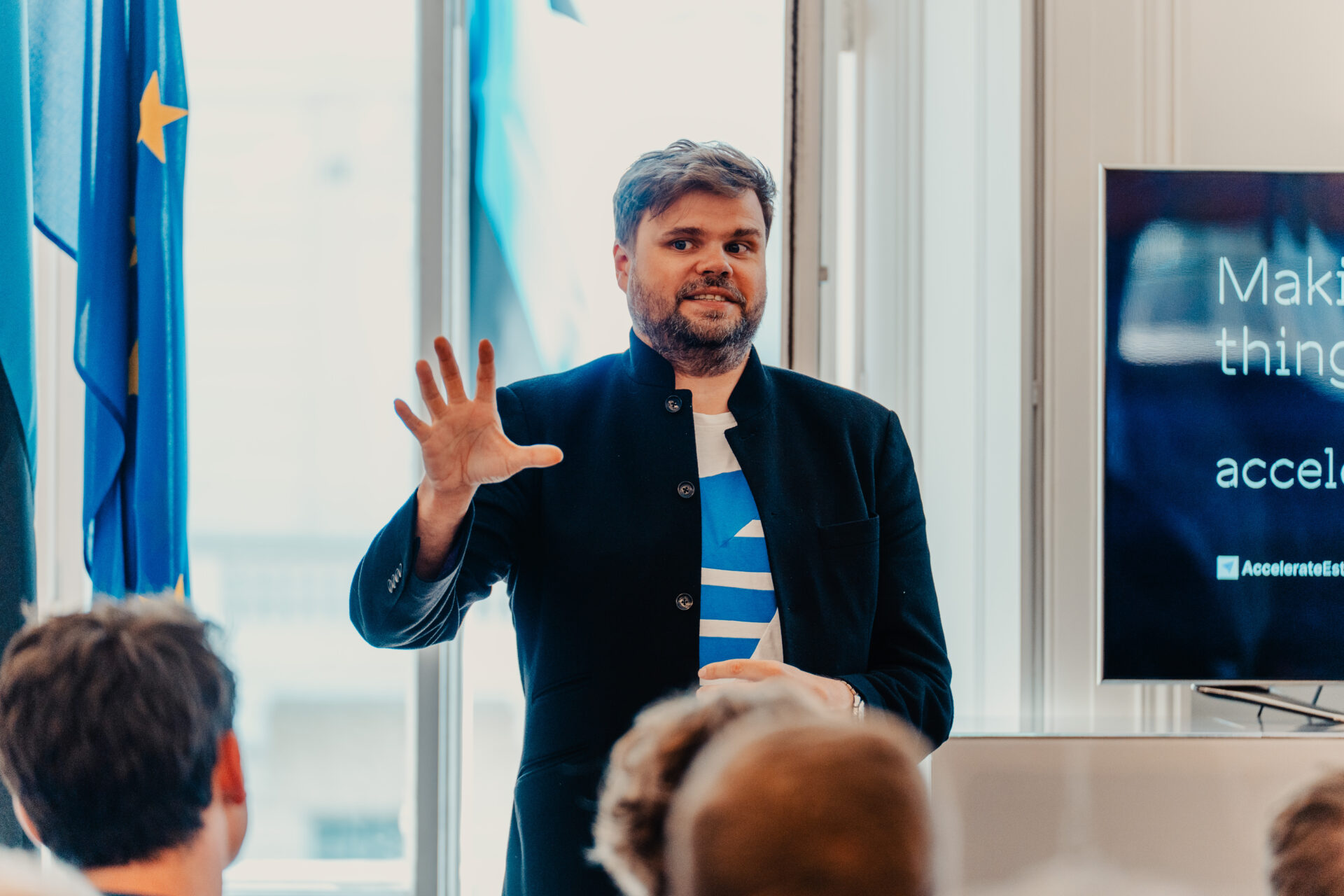
By Olari Püvi, CEO of Accelerate Estonia
Ask almost any founder building in deep tech, health, mobility, or energy what their biggest headache is, and regulation will probably be high on the list. Cash flow is always a concern too, but the two are closely connected. Going through regulative processes takes both time and money, and if you don’t have enough of either, regulations can become a huge barrier.
There’s a common belief in the startup world that regulators exist mainly to kill innovation. More rules mean more red tape and slower progress. But I think that mindset is out of date. Regulation and innovation aren’t enemies. The real question is how we write rules that let great technologies scale safely without getting stuck in bureaucracy for five years.
Why We Actually Need Rules
I would not want to live in a world without rules. If you’re building medical devices, developing drones, or testing autonomous vehicles, people’s lives are on the line, so there needs to be a clear framework for what is safe and what isn’t.
Rules also create trust. I wouldn’t step onto an airplane if I didn’t trust the systems keeping the plane in the air. The same is true for new technologies. If people don’t trust what you’re building, you won’t scale anyway.
So the problem isn’t that regulation exists. The problem is how we write it.
Bring Founders Into the Room
Too much legislation is still written without enough input from the people actually building and using the technology. If we want better regulation, two things need to happen.
- Bring founders into the room. Startups and engineers need a seat at the table when policy is being written, not after it has already been passed.
- Update rules based on real life. Laws shouldn’t be written in stone. They should evolve as we gather evidence about what works and what doesn’t.
At Accelerate Estonia, this is what we do. We invite founders to test their technology in Estonia, gather real-world data, and work directly with policymakers to address the rules that are holding them back. What we’ve learned is that the best way to understand what regulation is needed is to see how a technology actually works in practice.
The UK Has Scale. Estonia Has Speed.
For as long as we have worked with UK companies, I’ve been asked to compare the UK and Estonian ecosystems, but I don’t think that’s the right way to look at it. The two operate at very different scales and have different strengths.
The UK is a powerhouse. It has world-class research, capital, and a large market. But with that scale also comes legacy systems that can be slow. Getting regulatory approval for a new business model can take years, and that can burn through a startup’s runway very quickly.
Estonia can’t offer a massive consumer market. We know we’re not going to be a company’s ultimate destination. But our small size is also our advantage, because we can move quickly and bring founders and government officials into the same room.
That gives us the ability to create opportunities to test new technologies in the real world, rather than spending years debating what might happen. A company can come here, test the technology, gather the evidence, work through the regulatory questions, and then use what it has learned to expand into the UK, the EU, or elsewhere.
What This Looks Like in Practice
Take Bliq, a German company developing autonomous vehicle technology. Getting the licences needed to test self-driving technology across Germany and other large markets can be a long and difficult process.
While speaking at this year’s Thinking in Billions conference in Tallinn, Julian Glaab, Bliq’s CEO, recently called Estonia their “hack”. I think that captures quite well what we are trying to offer.

Instead of simply waiting for approval processes elsewhere, the team brought its technology to Tallinn. They are running vehicles on our streets, gathering live data, and testing how the technology works in the real world. At the same time, they are building the evidence and experience they will need as they enter other markets.
That’s where a small country like Estonia can be useful. We may not be the biggest market, but we can provide the space to test something before it is ready for a much larger one.
A Reality Check for Founders in Regulated Industries
If you’re building a company in a heavily regulated industry, this is my advice:
Calculate your real runway. Can you actually afford to wait three years for regulatory approval? If not, you need to think about your market-entry strategy differently. Regulatory obstacles can be just as expensive as delays in product development.
Look for public-sector partners. Don’t think of regulators only as gatekeepers. Look for the people and institutions willing to work with you, test alongside you, and help create a path forward.
Let’s Build What Comes Next
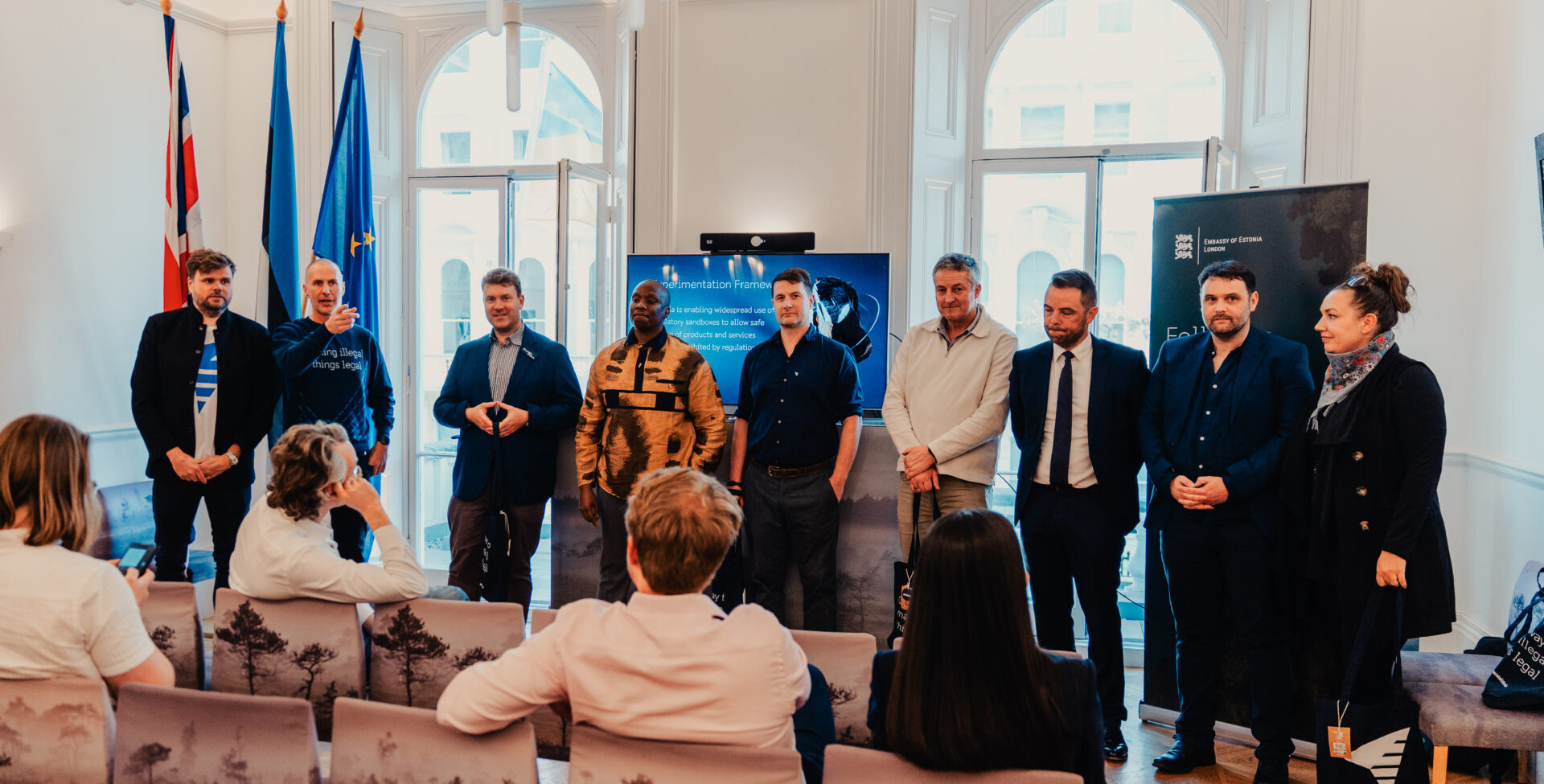
Breaking into regulated markets is hard, but founders shouldn’t have to fight the system alone. Policy doesn’t have to be something that happens to innovation. We can build it together, much like we build the technology itself. For Estonia, I think that means accepting that we won’t replace the bigger markets. Instead, we can help companies get from a promising technology to something that has been tested, proven and is ready to scale.
We’re heading to London soon to meet founders who are running into these exact regulatory obstacles. If that’s you, I encourage you to apply to pitch your company and the regulatory obstacle at our next event at the Estonian Embassy in London on October 15, 2026.